
Gas Processing Platform Instrumentation: Plating for Hazardous Area Classifications
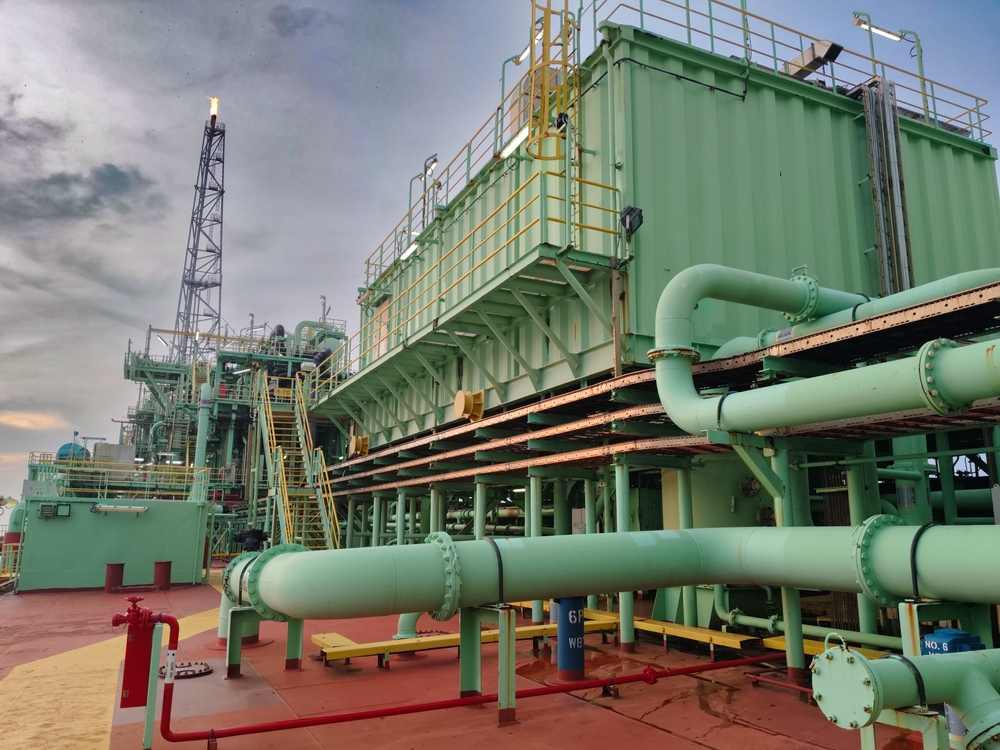
On gas processing platforms, the consequences of electrical component failure extend well beyond lost production. Flammable hydrocarbons and toxic hydrogen sulfide are present throughout these facilities, and any ignition source in the wrong location can trigger fires, explosions, or mass casualty events. This safety reality drives every aspect of instrumentation design, from area classification and certification to the plating materials specified for individual connector contacts. Engineers and manufacturers need to understand how coating selection, plating thickness, and surface finish interact with hazardous-area protection concepts. These variables influence both long-term reliability and the ignition risks the equipment is designed to prevent.
Zone 0, 1, and 2 Electrical Area Classification Requirements for Connector Systems
Hazardous area classification under IEC 60079 divides locations into three zones based on the frequency and duration of explosive atmosphere presence. Zone 0 designates areas with a continuous or long-term explosive atmosphere; Zone 1 covers locations where explosive atmospheres occur during normal operation; Zone 2 applies where they arise only occasionally.
Each zone dictates the permissible protection concepts for installed equipment. Zone 0 generally requires the highest level of ignition protection, most commonly safe equipment. Zone 1 permits flameproof and increased safety designs alongside intrinsic safety. Across all three zones, the plating applied to hazardous area connectors must preserve consistent electrical stability throughout service life. Degradation that alters resistance can affect signal integrity and, in some applications, the assumptions used during hazardous-area certification assessments.
Intrinsically Safe Circuit Design Considerations and Plating Material Selection
Intrinsically safe circuits limit stored electrical energy to levels insufficient to ignite the surrounding gas mixture under normal and fault conditions. Connector plating must deliver reliable, predictable conductivity within this energy budget — increases in contact resistance can affect thermal behavior and push beyond the assumptions established during certification testing.
Gold is the standard finish for IS circuit connectors and offshore instrumentation more broadly. Stable contact resistance, freedom from oxidation, and consistent performance across operating temperatures make it well suited to applications where electrical predictability is a safety requirement. Nickel underlayers beneath gold serve as diffusion barriers and add hardness that resists deformation during repeated mating cycles. Thickness specifications need to account for anticipated mating cycles across the installation’s service life, since wear that exposes underlayers can alter contact resistance in ways that invalidate the original IS assessment.
ATEX and IECEx Certification Requirements for International Operations
Gas processing facilities operating across international markets must satisfy two parallel certification frameworks. ATEX governs equipment placed on the European market; IECEx provides a scheme recognized across a wider range of countries, allowing qualified equipment to move between international projects without re-testing.
Both frameworks regulate the manufacturing processes behind certified equipment, not only the finished product. For plated components, this means processes must be documented and controlled so every production unit matches the certified prototype. Variations in bath chemistry, plating thickness, or post-treatment procedures outside the documented specification can void certification coverage. Pre-treatment processes such as cleaning, activation, and strike plating establish the adhesion foundation needed for consistent coating performance across the equipment’s service life.
Explosive Atmosphere Protection: Flameproof Enclosures and Increased Safety Designs
Flameproof enclosures contain any internal explosion and prevent flame propagation to the surrounding atmosphere. Their effectiveness depends on precise gap dimensions at enclosure joints and cable entries. Because joints rely on tightly controlled tolerances, plating thickness and surface finish at these interfaces must remain within the limits evaluated during certification testing. Nickel is commonly specified for flameproof joint surfaces — its hardness and resistance to corrosive atmospheres on oil and gas instrumentation installations make it a reliable choice.
Increased safety equipment eliminates ignition sources by preventing excessive temperatures and arcing through design rather than containment. Loose connections that generate heat or arcing represent direct failure of the protection concept. Plating specifications for equipment therefore prioritize contact stability, particularly at interfaces subject to thermal cycling from process temperature swings or outdoor solar loading.
Temperature Classification and Surface Temperature Limits for Plated Components
T-ratings are assigned based on maximum surface temperature under worst-case fault conditions, and equipment must carry a rating below the ignition temperature of the gases present. Plated surfaces affect this in two ways. Coating thermal conductivity influences heat dissipation to the enclosure surface, while coating properties more broadly can affect heat transfer in enclosed or thermally stressed assemblies. Excessive coating thickness on heat-generating components can disrupt thermal dissipation and should stay within validated design limits. Corrosion products accumulating on exterior surfaces degrade both properties over time — another reason corrosion-resistant finishes are essential to sustained T-rating compliance.
Sensor Connectivity in H2S Environments: Material Compatibility and Corrosion Resistance
Hydrogen sulfide attacks copper and copper alloys aggressively, forming sulfide compounds that increase contact resistance and can cause complete circuit failure. Silver, widely used in electrical contacts, sulfidates rapidly in H2S service. Gold over a nickel barrier layer protects sensor connector contacts from both direct H2S attack and diffusion through microscopic porosity to the copper substrate beneath. Specifications for H2S service should define minimum thicknesses for each layer individually, since the protective function of each depends on its own continuity. H2S environments also raise the risk of hydrogen embrittlement in mechanically loaded components, and post-plating baking treatments may be required before entry into service.
Documentation and Traceability Requirements for Hazardous Area Electrical Components
Hazardous-area certification places documentation and traceability obligations throughout the supply chain, extending to plated-component manufacturers. Production records demonstrate that delivered components match the processes and specifications evaluated during certification. Deviations require engineering review and may trigger re-testing. When replacing field instrumentation, operators rely on this documentation to confirm that a replacement matches the original specification — a step that supports the ongoing validity of the area classification scheme. Thorough process records provide the compliance assurance that both operators and certification bodies require.
Conclusion
Plating requirements for gas processing instrumentation are ultimately safety requirements. Electrical stability affects IS circuit compliance, corrosion resistance determines sustained T-rating adherence, and process documentation enables the certification traceability that hazardous area management demands. None of these can be addressed in isolation.
SAT Plating works with instrumentation manufacturers and engineering contractors to develop electroplating solutions engineered for hazardous area service. From prototype development through full-scale production, SAT Plating supports projects requiring qualified performance in gas processing environments. Contact SAT Plating to speak with a plating specialist about your application.