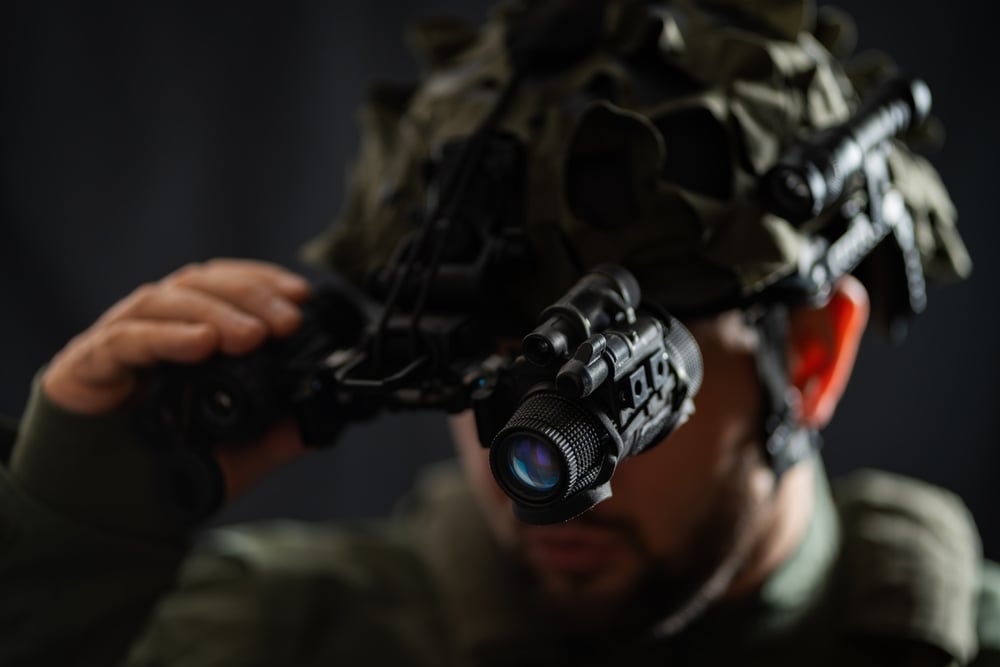

Surface Finishing for Next-Generation Helmet-Mounted Vision Systems
Modern helmet-mounted vision systems integrate an array of displays, sensors, processing electronics, and communications hardware into compact assemblies. These assemblies must withstand the mechanical demands of military service while remaining light enough for extended use. Many of these systems are also modular, with detachable battery packs, cables, and mounted components that operators connect and disconnect during use. Together, these features create demanding requirements for electromagnetic compatibility, electrical continuity across interfaces, and component durability in wearable equipment. Surface finishing helps meet several of these requirements. It is particularly relevant where polymer components need conductive properties and where electrical interfaces are handled repeatedly.
Material Selection for Helmet-Mounted Equipment
Weight is a significant consideration in helmet-mounted equipment because additional mass can increase neck strain and fatigue during extended use. Engineered polymers and composite materials offer opportunities to reduce housing weight, although material selection must also account for strength and durability. Many engineering polymers and certain composite materials are electrically insulating. Housings and internal structures that need to shield, ground, or carry current therefore require a conductive surface. Plating on lightweight plastics can provide the required electrical surface while preserving the weight and manufacturing advantages of the polymer substrate. Coatings on wearable equipment also have to remain bonded through impact, flexing, temperature changes, and routine handling. Adhesion depends on the substrate and on the surface preparation process, so the polymer and the coating system are best selected together.
Conductive Coatings for EMI Shielding
Conductive plating allows polymer housings and internal structures to contribute to EMI shielding without requiring those components to be manufactured entirely from metal. The coating supplies the conductive surface. Shielding performance depends on how that surface is incorporated into the overall design. Copper is commonly used as the conductive layer, often with nickel over it for corrosion and wear resistance. Other coating systems may be more appropriate depending on the substrate and specifications. In helmet-mounted assemblies, the shielded enclosure is often made up of several detachable parts, which places more emphasis on continuity across modular interfaces.
Connector and Contact Reliability
Connectors may experience frequent mating cycles throughout the equipment’s service life. These applications place particular demands on contact plating, which must resist mechanical wear while maintaining acceptable electrical performance. Contact reliability depends on the complete contact system, including contact force, geometry, and surface finish. A finish suitable for a connector with relatively few mating cycles will almost certainly fail wear resistance standards in a frequently disconnected interface.
Fretting is a concern in connectors exposed to vibration or repeated handling. Small movements between contacting surfaces can produce wear debris and, depending on the materials involved, oxidation that increases contact resistance. Nickel underplates are commonly used beneath precious metal contact finishes to limit diffusion from the substrate and provide mechanical support. However, resistance to fretting depends on the complete contact system, including contact force, finish selection, and connector design.
Corrosion exposure also varies with connector design. Some connectors are protected from environmental exposure by their location within the assembly, while others may be exposed to moisture, perspiration, or airborne contaminants. These exposures act differently. Perspiration contains chlorides and organic acids, salt air deposits chlorides that can promote pitting and galvanic corrosion, and humidity accelerates corrosion where contaminants are already present. Finish selection should reflect projected environmental conditions to mitigate contact issues.
Plating Requirements for Modular Assemblies
Modular helmet systems introduce interfaces between housings and attachment areas. Where these parts form part of a shielded enclosure or grounding path, electrical continuity must be maintained across each interface. This typically occurs through conductive mating surfaces, gaskets, contact springs, or bonding features designed into the parts.
Selective plating can be used where conductive coatings are required only on designated surfaces, such as grounding interfaces and contact areas. It can also keep coating off surfaces that must remain electrically isolated. Whether it is appropriate for an EMI shielding application depends on the enclosure design and the electrical continuity required between coated surfaces.
Conductive surfaces at frequently mated interfaces are subject to the same wear considerations as connector contacts. A coating that wears at a grounding interface can degrade continuity over time, so coating durability at these points should be evaluated against expected handling.
Environmental and Qualification Considerations
Pilot-worn and soldier-worn systems share many requirements, but they differ in how they are integrated, maintained, and qualified. Pilot-worn systems are integrated with aircraft and qualification generally follows the requirements of the airframe program. Depending on the platform, they may also need to tolerate vibration and rapid pressure changes. Maintenance also typically takes place in a controlled environment on defined schedules.
Soldier-worn systems are more likely to be serviced in the field. Battery changes and cable connections may happen outdoors, and equipment can be exposed to adverse conditions during use and transport. Limited maintenance access can make coating durability and connector protection especially important when specifications are developed. These differences affect coating selection, thickness, and test requirements. Requirements developed for one type of system may not transfer directly to another, even where the hardware appears similar.
Conclusion
Surface finishing requirements for helmet-mounted vision systems extend beyond corrosion protection. Conductive coatings can provide EMI shielding and grounding surfaces on lightweight polymer components, while appropriate contact finishes help maintain electrical reliability at frequently used interfaces. Material selection, coating adhesion, environmental exposure, and expected mating cycles should all be considered when developing plating specifications.
SAT Plating provides plating on engineering polymers, including PEEK and Ultem, and can help develop connectors to your design specifications. SAT Plating is ITAR registered and maintains an ISO 9001:2015 certified quality management system, supporting programs from prototype development through production. To discuss surface finishing for helmet-mounted or soldier-worn equipment, contact SAT Plating to speak with a plating specialist.